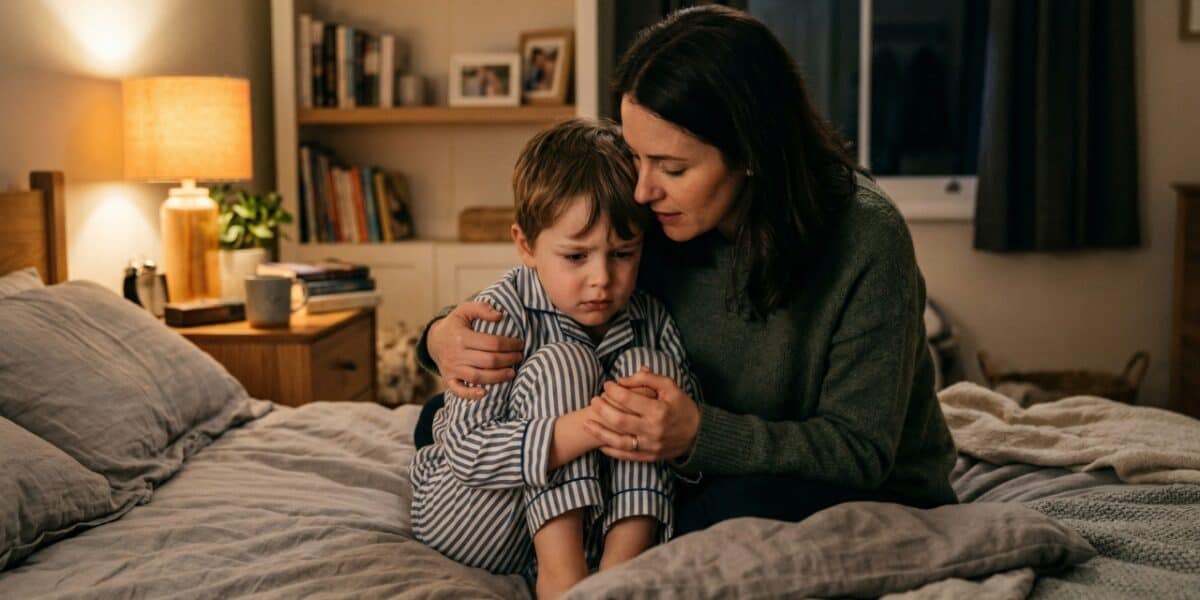
Anxiety is the most common mental health condition affecting children in the United States. According to the National Institute of Mental Health, an estimated 31.9% of adolescents will experience an anxiety disorder at some point, with symptoms often appearing years before a formal diagnosis is made. Yet many parents miss the early warning signs, not because they aren’t paying attention, but because childhood anxiety rarely looks the way adults expect it to.
This guide provides parents with a science-based framework for identifying anxiety in children, understanding the different types, knowing when to seek professional help, and implementing practical coping strategies at home.
Table of Contents
What Is Childhood Anxiety? A Clinical Definition
Anxiety in children is a persistent, excessive worry or fear that is disproportionate to the situation and interferes with daily functioning. It is important to distinguish between normal developmental fears, which are common and age-appropriate, and clinical anxiety, which is persistent, difficult to control, and causes meaningful impairment in a child’s life.
Normal developmental fears include fear of the dark in toddlers, fear of strangers in infants, and worry about fitting in during middle school. These are expected parts of development. Clinical anxiety goes beyond these milestones and persists even when the child understands rationally that the fear is unlikely or exaggerated.
Types of Anxiety Disorders in Children
Generalized Anxiety Disorder (GAD)
Children with GAD experience excessive, uncontrollable worry about a wide range of everyday topics, including school performance, family health, natural disasters, and future events. They often describe a constant “what if” mental loop and may seek frequent reassurance from parents and teachers.
Separation Anxiety Disorder
Separation anxiety is developmentally normal in toddlers between 6 and 18 months. When it persists past age three or returns intensely in older children, it may indicate an anxiety disorder. Children with separation anxiety experience extreme distress when away from primary caregivers and may refuse school, complain of physical symptoms before separations, or have nightmares about losing their parents.
Social Anxiety Disorder
Social anxiety involves intense fear of social situations where the child might be judged, embarrassed, or humiliated. It often manifests as school refusal, avoiding birthday parties and group activities, difficulty speaking in class, or extreme discomfort making eye contact. Social anxiety is frequently mistaken for shyness, which can delay appropriate intervention.
Specific Phobias
Specific phobias involve intense, irrational fear of a particular object or situation, such as vomiting (emetophobia), insects, loud noises, or medical procedures. Unlike general fearfulness, phobias are highly targeted and trigger immediate, intense anxiety responses including panic attacks.
Panic Disorder
Panic disorder involves recurrent, unexpected panic attacks, physical surges of intense fear that may include racing heart, shortness of breath, dizziness, chest tightness, and a sense of losing control. Children experiencing panic attacks often do not have the vocabulary to describe what is happening and may instead complain of “feeling sick” or “thinking they are dying.”
Early Warning Signs of Anxiety in Children by Age
Toddlers and Preschoolers (Ages 2 to 5)
- Extreme clinginess that goes beyond typical separation anxiety timelines
- Frequent nightmares, trouble falling asleep, or refusal to sleep alone
- Repeated physical complaints without medical cause: stomachaches, headaches
- Intense tantrums triggered by transitions or unexpected changes in routine
- Regression to earlier behaviors such as bedwetting or thumb-sucking
School-Age Children (Ages 6 to 12)
- Refusing to attend school or frequent nurse visits to avoid the classroom
- Excessive worry about tests, performance, or making mistakes
- Avoidance of social situations, playdates, or group activities
- Difficulty concentrating or completing work due to intrusive worries
- Reassurance-seeking behavior: asking “are you sure?” repeatedly
- Irritability, angry outbursts, or emotional meltdowns that seem disproportionate
- Muscle tension, headaches, or stomach problems particularly before school
Adolescents (Ages 13 to 18)
- Avoidance of social events, dating, or extracurricular activities
- Perfectionism combined with intense fear of failure or criticism
- Sleep disturbances: difficulty falling asleep or sleeping too much
- Withdrawing from friends and family, spending increasing time alone
- Using technology or social media to avoid in-person interaction
- Physical symptoms including racing heart, nausea, or dizziness before social situations
- Expressing catastrophic thinking: “Everything will go wrong,” “I can’t do anything right”
The Neuroscience of Anxiety in the Developing Brain
Anxiety is not a character flaw or sign of bad parenting. It is a neurobiological experience rooted in the brain’s threat detection system. The amygdala, often called the brain’s “alarm system,” processes potential threats and triggers the body’s fight-or-flight response. In children with anxiety disorders, this system is overactive, perceiving danger in situations that are objectively safe.
Research from the National Institutes of Health shows that children with anxiety disorders have measurable differences in amygdala activity and connectivity with the prefrontal cortex, the area of the brain responsible for rational thinking and emotional regulation. This is not something children can simply “think their way out of.” Effective treatment addresses the neurological patterns underlying the anxiety response.
Importantly, the developing brain is highly plastic and responsive to intervention. Early treatment produces significantly better outcomes than waiting. Research consistently shows that untreated childhood anxiety frequently persists into adulthood and is a significant risk factor for depression, substance use, and relationship difficulties.
When to Seek Professional Help
Parents should consider consulting a pediatrician or licensed mental health professional when:
- Anxiety symptoms have persisted for four weeks or more
- The child is avoiding school, social activities, or situations they previously enjoyed
- Physical complaints (stomachaches, headaches) occur regularly without medical cause
- Sleep is consistently disrupted by worry or fear
- The child expresses hopelessness, persistent sadness, or refuses to engage in daily activities
- Family routines are significantly disrupted by the child’s anxiety
- The child describes feeling unable to stop their thoughts or worries
The first-line evidence-based treatment for childhood anxiety is Cognitive Behavioral Therapy (CBT), which has been validated in hundreds of randomized controlled trials. CBT helps children identify distorted thinking patterns, learn relaxation techniques, and gradually face feared situations (exposure therapy) in a controlled, supported way. For moderate to severe cases, medication may be recommended in combination with therapy, with SSRIs (Selective Serotonin Reuptake Inhibitors) having the strongest evidence base for pediatric anxiety.
Coping Strategies Parents Can Implement at Home
Avoid Accommodation
One of the most counterproductive responses to childhood anxiety is accommodating the anxiety by helping the child avoid feared situations. Research by Dr. Eli Lebowitz at Yale University’s Child Study Center found that family accommodation, while well-intentioned, actually reinforces anxiety and prevents children from learning that they can handle discomfort. Instead, express empathy while gently encouraging gradual exposure.
Teach the “Worry Time” Strategy
Research-backed cognitive techniques include scheduling a designated 15-minute “worry time” each day. When worries arise outside this window, children practice briefly noting the worry and postponing full engagement until the scheduled time. This builds the neural habit of not being hijacked by every anxious thought.
Practice Calm Breathing Together
Diaphragmatic breathing activates the parasympathetic nervous system and directly counteracts the physical symptoms of anxiety. Box breathing (4 counts in, 4 counts hold, 4 counts out, 4 counts hold) is simple enough for children ages six and up to learn and use independently.
Model Healthy Anxiety Management
Children learn emotional regulation by watching their caregivers. Narrating your own anxiety management out loud, for example saying “I’m feeling nervous about this meeting, so I’m going to take three deep breaths and remind myself I’ve handled hard things before” teaches children that anxiety is manageable and that adults feel it too.
Frequently Asked Questions About Childhood Anxiety
Is childhood anxiety inherited?
Genetics play a meaningful role. Research indicates that anxiety disorders have a heritability rate of approximately 30 to 40%, meaning a genetic predisposition exists but environmental factors, including parenting, stress exposure, and early experiences, significantly shape whether and how anxiety develops. Having an anxious parent does not mean a child will develop an anxiety disorder.
Can anxiety in children go away on its own?
Mild developmental fears often resolve naturally as children mature. However, clinical anxiety disorders are less likely to resolve without intervention and frequently worsen over time if untreated. Research published in JAMA Psychiatry found that anxiety disorders that begin in childhood and go untreated show significant continuity into adulthood.
How do I talk to my child about anxiety without making it worse?
Use straightforward, non-alarming language. Acknowledge feelings without amplifying them. “I notice you seem worried about school tomorrow. That makes sense. Worries are something brains do, and we can practice handling them together” is far more effective than excessive reassurance (“You have nothing to worry about!”) which children’s anxious brains learn not to trust.
What is the difference between anxiety and normal worry?
Frequency, intensity, duration, and impairment are the key distinguishing factors. All children worry. Anxiety disorder is present when worry is excessive relative to the situation, difficult to control, persistent for weeks or months, and meaningfully interferes with the child’s ability to participate in school, friendships, or family life.
Are anxiety disorders more common now than they used to be?
Data from the CDC, the American Psychological Association, and independent researchers consistently shows significant increases in reported childhood and adolescent anxiety over the past two decades. Contributing factors under study include increased academic pressure, reduced unstructured play time, social media use, climate anxiety, and the lasting effects of the COVID-19 pandemic on children’s social development.
Key Takeaways
Seek professional support when anxiety symptoms persist for four or more weeks or interfere with daily functioning
Anxiety is the most common mental health condition in children, affecting nearly 1 in 3 adolescents at some point
Early symptoms are frequently misidentified as behavioral problems, shyness, or physical illness
Different types of anxiety (GAD, social anxiety, separation anxiety, phobias) present differently and require targeted approaches
The developing brain is highly responsive to early intervention. Early treatment produces significantly better outcomes
Cognitive Behavioral Therapy (CBT) is the first-line evidence-based treatment for childhood anxiety
Parents can make a meaningful difference through validation, avoiding accommodation, and modeling healthy emotional regulation